
Image by Gaylene Norton
Growing a Greener Future
Emu Valley Rhododendron Garden stands as a living testament to what thoughtful stewardship can achieve when conservation is placed at the heart of a landscape. At its core is a clear, ambitious vision: to protect, celebrate, and expand one of the world’s most diverse collections of rhododendrons while nurturing the broader ecosystems that allow these remarkable plants to thrive.
This garden is not simply a curated space for visitors; it is an active conservation site where botanical heritage, ecological responsibility, and community engagement intersect in meaningful ways.
The conservation vision begins with the plants themselves. Rhododendrons, with their extraordinary range of forms, colours, and habitats, represent a global botanical treasure. Many species originate from fragile mountain ecosystems across Asia, where habitat loss, climate change, and human pressures threaten their survival. By cultivating species from these regions—often rare or endangered—the garden acts as a safeguard, preserving genetic diversity and offering a refuge for plants that may one day disappear from their native landscapes. Each specimen grown here contributes to a broader conservation network, supporting research, seed banking, and international collaboration aimed at protecting rhododendrons for future generations.
Ultimately, Emu Valley Rhododendron Garden embodies a powerful truth: conservation is not a static act but an ongoing commitment. Through sustainable practices, global plant preservation, and community education, the garden protects what is precious today while cultivating hope for tomorrow. It stands as a reminder that when we care for the natural world with intention and respect, we create landscapes that endure, inspire, and flourish.
See our Sustainable Tourism and Sustainable Development Policies below.
Sustainable Tourism Policy
Guiding Principles: Our approach to sustainable tourism is guided by the following principles:
Environmental Stewardship
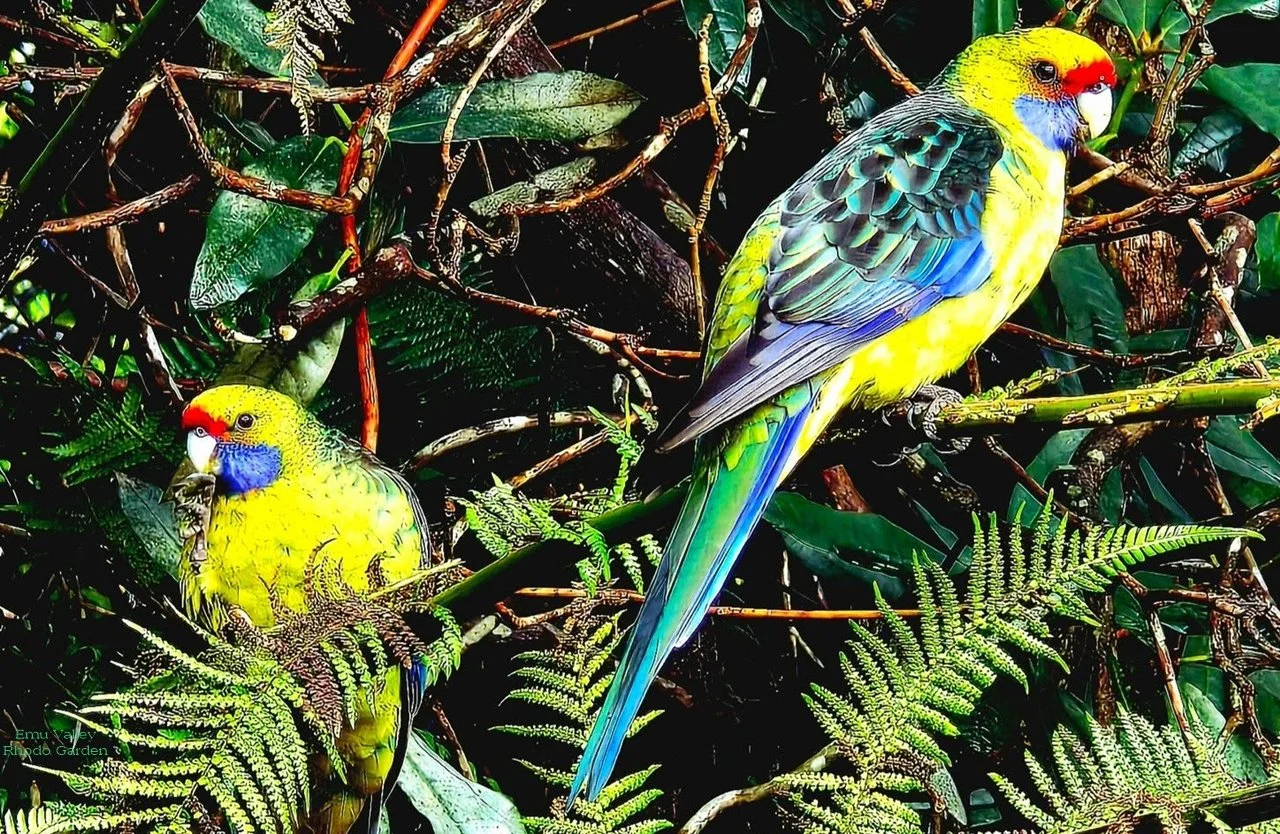
Our Garden is a haven to diverse native wildlife species, including amphibians, reptiles and birds, as well as the important monotremes, the platypus and echidna.
Our primary concern is to sustain a healthy ecosystem for both the flora and fauna, and to avoid causing harmful impacts to them when development is undertaken within the Garden to improve or grow its facilities.
Above: Image by Gaylene Norton
The Garden commits to:
Conservation and Biodiversity
Maintain and expand healthy, diverse rhododendron and companion plant collections, focusing on rare or endangered species.
Protect soil health, waterways, and wildlife habitats within the 11-hectare site, by partnering with the appropriate expertise when necessary.
Manage invasive species responsibly, by either manual removal or using low-impact herbicides.
Use environmentally responsible plant management practices.
Resource Management
Reduce energy consumption through efficient systems and renewable energy where possible and always seek to improve on current systems.
Conserve water through digital irrigation systems which track water use, monitoring tank intake and levels, and employing water-sensitive design in our landscaping.
Minimise waste through recycling, composting, and reduction of single-use materials.
Encourage preferred suppliers to adopt similar sustainable practices.
This policy is approved by the Board of the Emu Valley Rhododendron Garden and forms part of the Organisation’s Governance Framework.
Social and Community Commitments
The Garden commits to having a positive impact on our local Community by:
Demonstrating Cultural Respect – Recognising and respecting Tasmania’s cultural heritage
Providing accessible, safe, and welcoming facilities for all visitors.
Supporting local businesses, suppliers, and tourism operators.
Creating opportunities for volunteering, community participation and local employment.
Delivering educational programs that promote sustainable gardening and environmental awareness.
Collaborating with regional tourism and other conservation organisations.
Economic Sustainability
As a not-for-profit organisation, we commit to:
Maintaining transparent governance and financial management by having regular reviews and an annual audit.
Being adaptable by diversifying our revenue through admissions, memberships, events, donations, grants, and online sales.
Reinvesting surpluses into conservation, infrastructure, and visitor improvements.
Ensuring tourism growth does not compromise environmental values.
Visitor Experience and Responsibility
We aim to:
Provide excellent customer service and a high-quality product across all experiences within our Garden.
Provide interpretive information about the importance of conservation and sustainability.
Encourage responsible visitor behaviour through clear signage and communication.
Promote low-impact events and environmentally responsible tourism practices.
Visitors are encouraged to respect plant collections, wildlife, facilities, and fellow guests.
Partnerships and Procurement
We will:
Engage and promote local and sustainable suppliers.
Work with partners who align with our sustainability values.
Encourage event organisers and commercial operators onsite to follow sustainable practices.
Monitoring and Continuous Improvement
We commit to:
Reviewing this policy every two years.
Setting measurable sustainability goals.
Monitoring key indicators such as energy use, water use, waste diversion, and visitor satisfaction.
Reporting progress to the Board and stakeholders.
Governance
This policy is approved by the Board of the Emu Valley Rhododendron Garden and forms part of the Organisation’s Governance Framework.
Sustainable Development Goals Policy
Emu Valley Rhododendron Garden is committed to sustainable, responsible, and future‑focused management of its landscape, collections, operations, and community relationships. Our work aligns with the United Nations’ 17 Sustainable Development Goals (SDGs) under the UN 2030 Agenda for Sustainable Development. These goals provide an internationally recognised framework for addressing environmental, social, cultural, and economic challenges while ensuring that resources and ecosystems remain resilient for future generations.
Further information on the UN SDGs is available at: https://sdgs.un.org/goals
This policy outlines how Emu Valley Rhododendron Garden currently contributes to selected SDGs through its horticultural practices, conservation programs, visitor experience, partnerships, and community engagement.
SDG 3: Good Health and Wellbeing
Emu Valley Rhododendron Garden provides a restorative natural environment that supports physical and mental wellbeing. The garden offers opportunities for gentle exercise, outdoor recreation, photography, and quiet reflection. Research consistently demonstrates that time spent in nature reduces stress, improves cognitive function, and enhances overall health. Our landscape also contributes to improved air quality through extensive plantings and healthy vegetation.
SDG 4: Quality Education
Emu Valley Rhododendron Garden supports lifelong learning through formal and informal educational opportunities. We partner with the University of Tasmania Children’s University to encourage young people to explore plants, ecology, and creativity.
Free entry for visitors under 16 enhances accessibility and supports family‑based learning.
Educational handouts and interactive experiences help visitors engage with botanical knowledge.
Emu Valley Rhododendron Garden provides practical placements for horticulture and botany students seeking hands‑on experience in a working botanical garden.
SDG 8: Decent Work and Economic Growth
As a not‑for‑profit organisation, Emu Valley Rhododendron Garden contributes to regional economic development through eco‑tourism and community partnerships.
We welcome visitors from across Australia and international cruise markets, supporting local businesses and increasing tourism‑related revenue.
Our volunteer and staff team is central to maintaining the garden’s high standards. Free role‑specific training enhances skills, employability, and community capacity.
Collaboration across diverse backgrounds fosters knowledge exchange and strengthens the garden’s operational resilience.
SDG 10: Reduced Inequalities
Emu Valley Rhododendron Garden is committed to inclusivity, fairness, and equitable access.
Our volunteer CORE VALUES framework—Teamwork, Respect, Honesty, Kindness & Compassion, and Flexibility—guides behaviour and ensures a supportive environment for all.
Membership options, including host passes, increase community access to the garden.
Wheelchair‑accessible pathways and a pre‑booked guided buggy service ensure that visitors with mobility challenges can enjoy the landscape.
SDG 11: Sustainable Cities and Communities
Emu Valley Rhododendron Garden contributes to the preservation and celebration of cultural and natural heritage.
The garden incorporates culturally significant structures, including authentically researched Japanese features such as the Tea House, enhancing cultural understanding and appreciation.
Our public acknowledgement of Country recognises the deep cultural history of the land on which the garden stands.
SDG 12: Responsible Consumption and Production
Emu Valley Rhododendron Garden prioritises low‑waste, resource‑efficient operations.
Recycling, repurposing, and responsible disposal are embedded in daily practice.
Onsite composting transforms organic waste into potting media, reducing reliance on commercial products and lowering our carbon footprint.
A modern irrigation system supplied by rainwater, delivers targeted watering based on plant needs and weather patterns, ensuring efficient water use.
SDG 13: Climate Action
Emu Valley Rhododendron Garden is an active participant in global climate‑focused botanical networks.
As a registered member of the Climate Change Alliance of Botanic Gardens, we contribute to and benefit from international research, climate‑risk tools, and adaptation strategies.
The garden functions as a significant carbon sink, with the potential to absorb an estimated 400,000 kg of CO₂ annually.
Climate‑responsive horticultural planning, including succession strategies, supports long‑term resilience of plant collections.
SDG 14: Life Below Water
Emu Valley Rhododendron Garden protects and monitors aquatic ecosystems within its interconnected dam system.
Emu Valley Rhododendron Garden hosts a platypus tracking system as part of collaborative research, with Simon Roberts (Biologist) and James McGregor (Veterinarian), who monitor the behaviours of our (currently 5 tagged) resident platypus to provide data on these intriguing monotremes.
A public streaming service allows visitors to observe platypus behaviour, enhancing awareness of freshwater biodiversity.
Regular monitoring of water quality and aquatic species helps prevent the establishment of invasive flora and fauna.
SDG 15: Life on Land
Emu Valley Rhododendron Garden conserves a diverse range of plant species from around the world, including rare and threatened taxa.
The collection includes significant species such as living fossils Ginkgo biloba and the Wollemi Pine, alongside extensive rhododendron diversity.
Native blackwoods are preserved to support microclimates essential for tropical vireyas and to maintain soil structure.
The garden’s biodiversity supports local fauna and contributes to cooler microclimates, enhancing ecological resilience.
SDG 17: Partnerships for the Goals
Collaboration is central to Emu Valley Rhododendron Garden’s mission.
We are part of the Tasmanian Branch of BGANZ, alongside the Royal Tasmanian Botanical Gardens, the Tasmanian Arboretum, and Inala Jurassic Garden.
Emu Valley Rhododendron Garden is a member of Botanic Gardens Conservation International and the Climate Change Alliance of Botanic Gardens.
Partnerships with community groups, researchers, volunteers, and local businesses strengthen our capacity to address sustainability challenges and support shared environmental goals.
Conclusion
Emu Valley Rhododendron Garden is committed to advancing sustainability through practical action, scientific collaboration, and community engagement. By aligning our work with the UN Sustainable Development Goals, we ensure that our garden remains a thriving, resilient, and inspiring landscape for current and future generations.